

There Is No Easter Sunday Without Good Friday
There Is No Easter Sunday Without Good Friday
Learning to Trust God’s Work in Winter Seasons of the Soul
Winter Tells the Truth
I live in Connecticut, where we experience all four seasons.
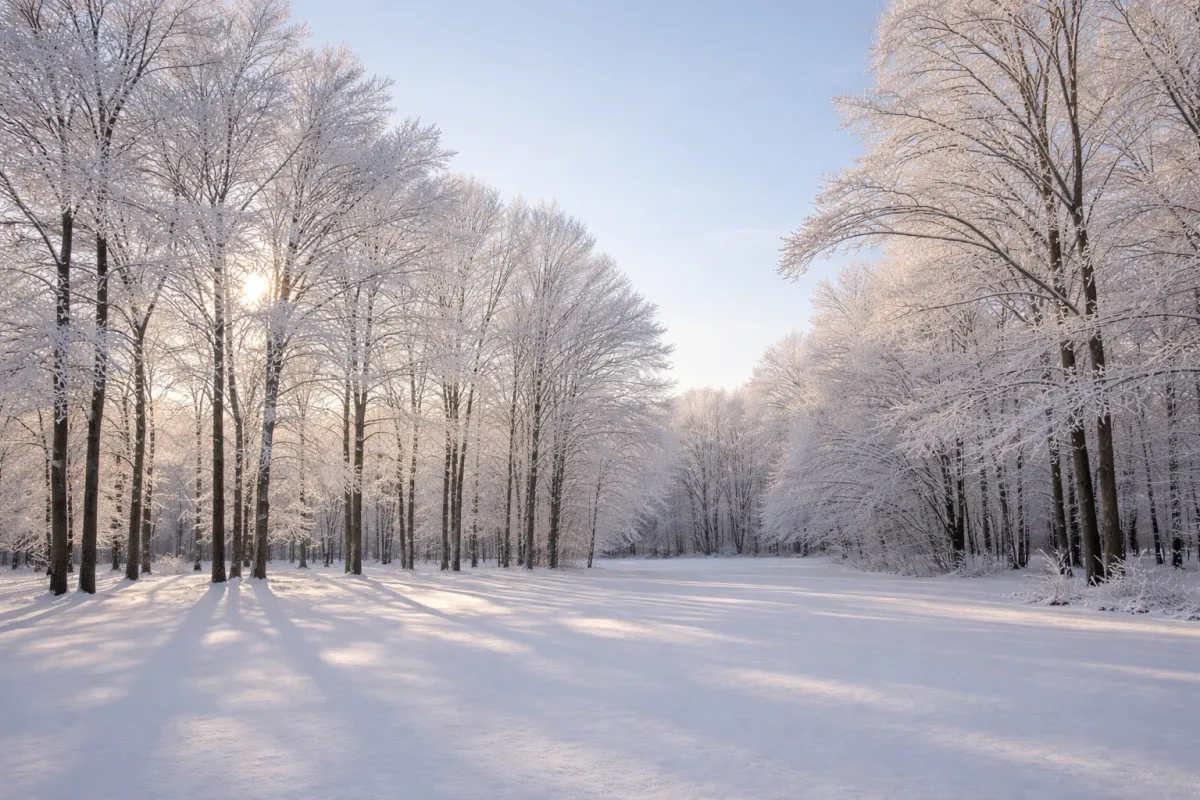
Right now, the ground is covered in snow. The sky is a clear, piercing blue. The temperature hovers around 31 degrees, cold but not unbearable. Winter, in this moment, is quiet and strikingly beautiful. The world feels hushed, almost reverent, as if nature itself is resting.
Of course, winter looks different depending on where you live. For some, it is harsh and relentless. For others, gentle and fleeting. Our experience of winter is shaped by geography, climate, and context.
This reflection is not primarily about the weather.
It is about winter as a metaphor, a way of understanding the inner life, the spiritual life, and the seasons we all pass through as human beings.
The Beauty and the Danger of Winter
Winter can be beautiful.
Fresh snow softens sharp edges. Bare trees reveal elegant lines hidden by summer’s fullness. Cold air sharpens the senses and invites stillness.
But winter can also be treacherous.
Snow turns to ice. Footing becomes uncertain. Crisp temperatures can lead to frostbite if we are not attentive. What is beautiful from a distance can become dangerous if we ignore its limits.
This tension matters because it mirrors our interior lives.
Just as winter in nature contains both beauty and risk, so too do the winter seasons of the soul.
Winter in the Spiritual Life
The spiritual tradition has long recognized that the interior life is not linear. It unfolds in stages, often described as purgative, illuminative, and unitive, and within each stage there is a continual ebb and flow. Seasons of clarity alternate with obscurity, consolation with desolation, warmth with cold. Growth does not move in a straight line, but through rhythms that refine, deepen, and mature the soul over time.
These interior winters arrive through many doors:
illness or recovery
grief or heartbreak
depression or mental illness
vocational disruption or job loss
seasons of waiting we did not choose
And very often, winter arrives in our closest relationships.
Marriages, too, pass through winters, seasons where love feels distant, connection thins, hope quiets, and what once felt vibrant now feels cold or barren. These seasons can be frightening, especially when dormancy is mistaken for death.
Dormancy Is Not Failure
In nature, winter is not a sign that life has failed.
It is a sign that life has gone underground.
Roots deepen. Growth continues invisibly.
Winter allows us to speak about:
Dormancy without failure
Purification without punishment
Stillness without shame
Healing without performance
These are not abstract ideas for me right now. They are realities I am living.
This week, I am undergoing surgery on my cervical spine, a necessary intervention for a degenerative condition that, left untreated, could lead to serious and permanent harm. This is not a walk in the park. It will temporarily take me out of commission, affect my voice, and require me to step away from work and productivity in ways that are uncomfortable.
But this decision is not rooted in fear or collapse.
It is an act of stewardship.
I am choosing a temporary winter so that, God willing, I can return to years of life lived more fully, present to my husband, my children, my grandchildren, and the people I mentor.
“Therefore, we do not lose heart. Though our outer self is wasting away, our inner self is being renewed day by day.”
(2 Corinthians 4:16)
Good Friday Comes First
Christian faith does not deny winter.
It interprets it.
Scripture does not promise a life without suffering. It promises a God who enters it with us and brings life from within it.
“I consider that the sufferings of this present time are not worth comparing with the glory that is to be revealed to us.”
(Romans 8:18)
This is why Christians can say, without sentimentality:
There is no Easter Sunday without Good Friday.
The Cross comes before the Resurrection.
Death comes before new life.
Winter comes before spring.
When suffering is united to Christ, it is not wasted. It becomes purifying rather than punishing, transformative rather than destructive, not because suffering is good in itself, but because God is faithful within it.
If You Are in a Winter Season
If you are in a winter season right now, in your body, your faith, or your marriage, hear this clearly:
Nothing is wrong with you.
Winter does not mean you have failed.
It does not mean your marriage is beyond hope.
It does not mean your faith is weak.
It does not mean God has abandoned you.
It may simply mean that something new is being prepared beneath the surface.
“Let us not grow weary in doing good, for in due season we shall reap, if we do not lose heart.”
(Galatians 6:9)
God works in hidden ways. Roots grow in darkness. Resurrection is often preceded by silence.
Winter as an Invitation to Interior Work
Winter seasons are not meant to be endured alone. They are invitations to turn inward with honesty, courage, and faith. This is often the right time for interior work, the slow, attentive work of understanding our relational patterns, tending to wounds, and allowing God to meet us where we actually are.
In my mentorship work, I walk with individuals and couples through these winter seasons, especially those experiencing strain or suffering in their relationships and marriages. Together, we make meaning of what feels confusing, painful, or stuck, and we attend to the interior transformation that allows new life to emerge, not through force or fixing, but through presence, truth, and grace.
If this season resonates with you, it may be a faithful time to begin, or return to, interior work, supported by accompaniment rather than pressure.
Looking Toward Spring
I step into this season with trust and with hope.
Not a naive hope that ignores risk or difficulty, but a grounded hope that believes God is faithful beyond what I can currently see. I trust that this winter will refine what matters most. I trust that it will draw me closer to Jesus, uniting my small suffering to His Cross. And I trust that it is preparing the way for renewed life, renewed work, and renewed presence.
Spring will come, often quietly, and always in God’s time.
And when it does, we may discover that what felt like loss was, in fact, preparation.